This article was originally published in Australian Waste Management Review. Please see the original article here.
Tana’s ‘Smart Landfilling’ approach to waste management employs key shredding and compaction machinery, and data recorded by an advanced fleet management system.
Australia’s waste management sector is facing a growing landfill capacity problem, forcing operators to rethink how they manage and extend existing airspace.
Increasingly, the answer lies in smarter landfill practices – integrating pre-treatment, compaction and data-driven decision-making to maximise efficiency and lifespan.
Tana Australia is helping landfill operators manage waste through its ‘Smart Landfilling’ approach – an integrated solution that combines pre-treatment, compaction, digital tools and service support to ensure efficient and optimised landfill operations.
Smarter use of landfill airspace
“The ‘Smart Landfilling’ concept is built around one key objective: maximising the efficient use of landfill airspace,” says Mikko Poikonen, Product Marketing Manager, Compactors, at Tana.
Mikko explains that the approach favours shredding waste as pre-treatment before compacting it at a landfill site to maximise efficiency.
“Landfills receive a wide variety of waste streams, with significant differences in material composition and particle size,” he says. “By pre-shredding the waste, the material becomes more uniform and homogeneous, so the compactor can handle it more efficiently and achieve a higher level of compaction.
“At the same time, shredding often helps to separate valuable materials from the waste stream, supporting recycling and improving overall process efficiency.”
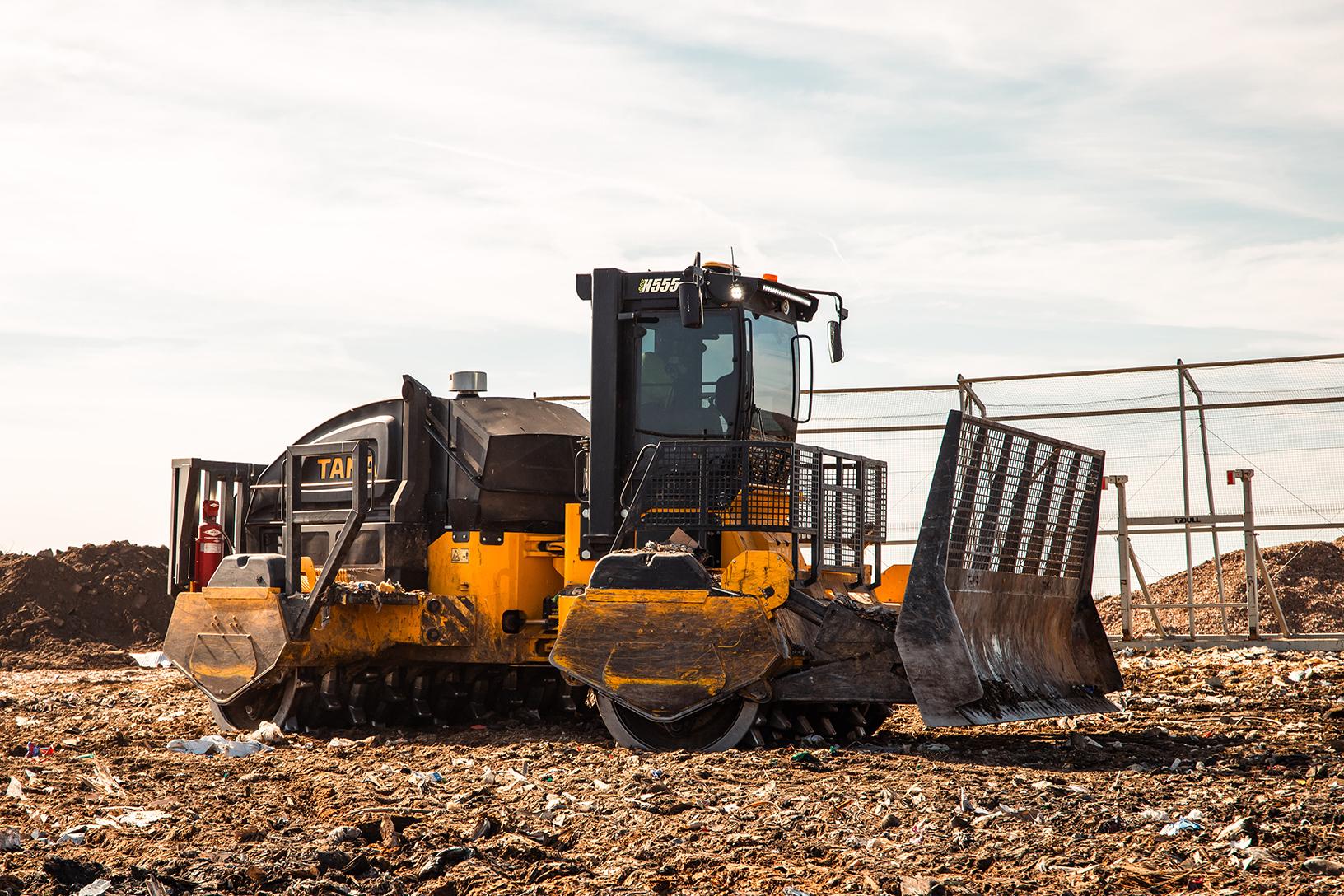
TANA landfill compactors play an important role in maximising landfill efficiency.
Shredding and compaction working together
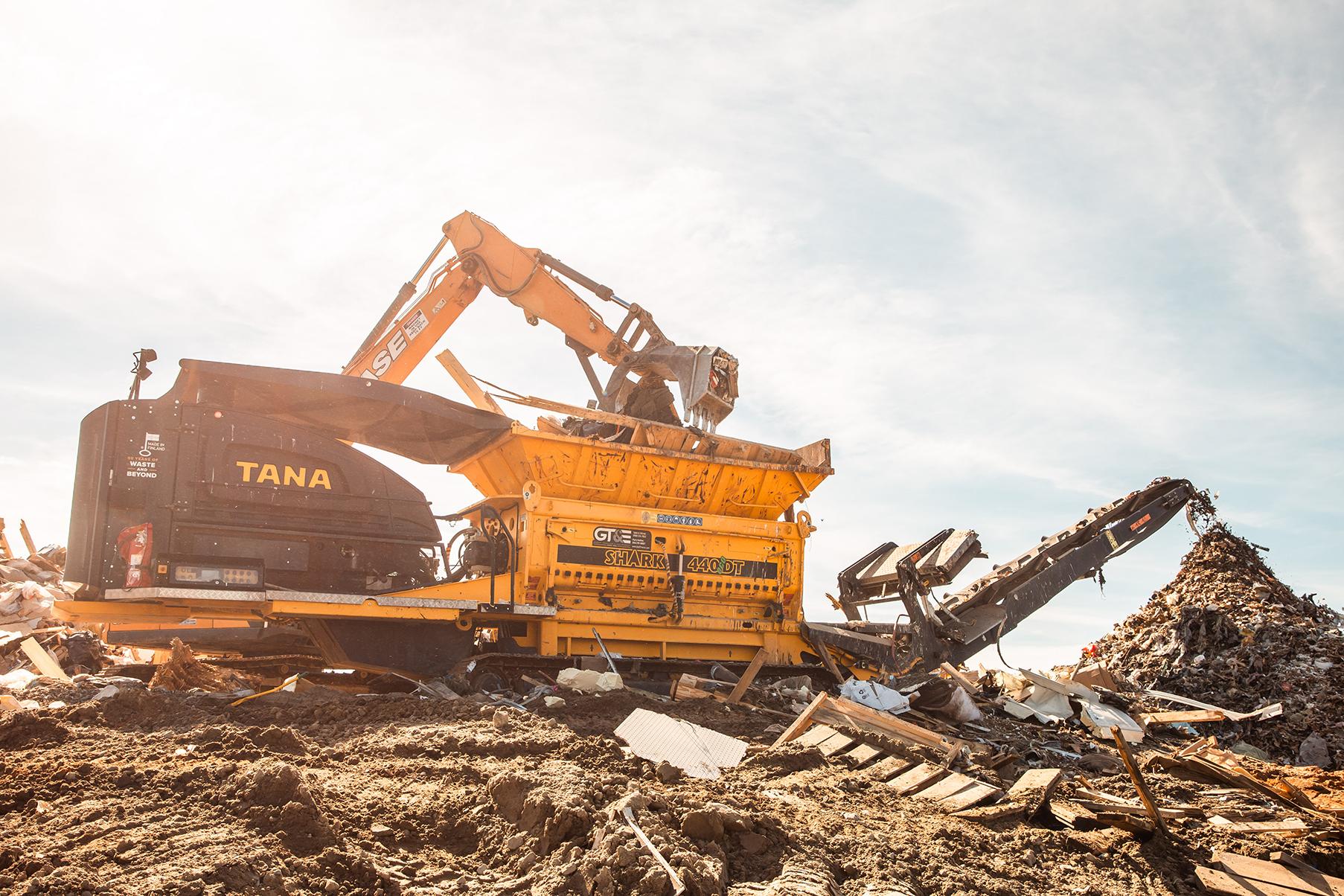
TANA shredders tackle challenging waste streams such as municipal solid waste, construction and demolition waste, mattresses and tyres. They can handle foreign objects such as concrete and metal. In addition, an optional magnet enables the shredders to separate metals effectively during processing.
Following shredding and pre-treatment of landfill waste, TANA landfill compactors play an important role in maximising efficiency. TANA’s signature rigid-frame design distributes the machine’s weight evenly across both drums.
The full-width drums leave no uncompressed areas. At the same time, their structure prevents material from escaping beneath the drums. As a result, the crushing and compaction force reaches precisely where needed. In addition, the design maximizes tooth contact with the ground. This way, the machine breaks down the waste structure more efficiently and improves overall compaction performance.
Tana’s latest H-series landfill compactors combine eco-modes with smart power management systems to adjust engine speed and hydraulic output based on the load.
“By optimising the interaction between the diesel engine and drive hydraulics, we can maintain high pushing force and crushing performance even at lower engine speeds,” says Mikko. “And, by combining pre-shredding with efficient compaction, operators can achieve significantly higher compaction performance, which in some cases can extend the lifespan of a landfill by several years.
“Field studies have shown improvements of up to approximately 30% in the compaction density of shredded material, highlighting the impact of proper material preparation on overall landfill performance.”
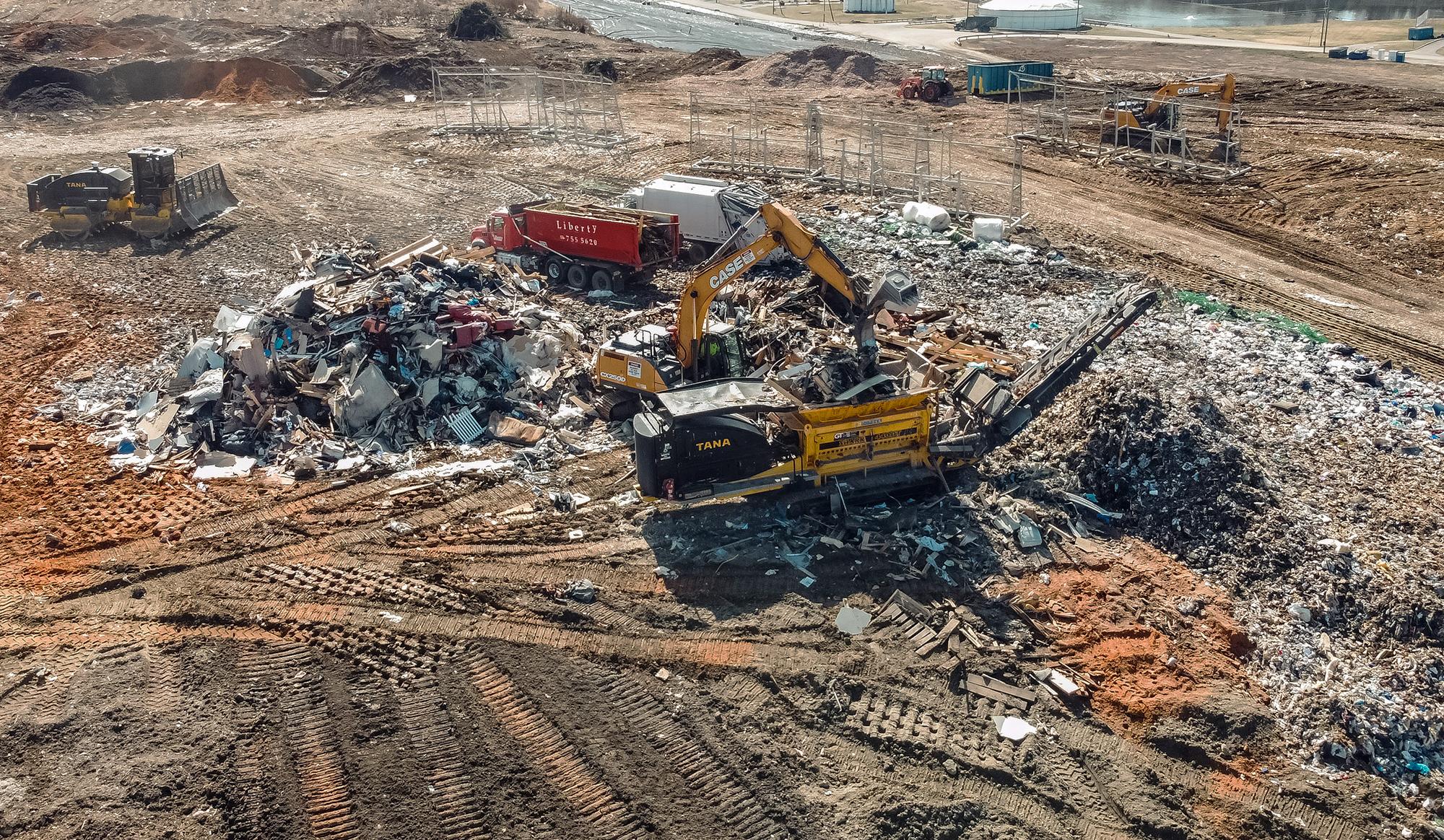
The TanaConnect® platform transforms landfill operations from running on experience-based decision making, to real-time, data-driven decision-making.
Turning landfill operations into measurable data
The TanaConnect® fleet management platform records data from TANA machines, helping operators further improve efficiency in landfill management. Mikko explains that the platform transforms landfill operations from running on experience-based decision-making to real-time, data-driven decision-making.
“The system provides transparency into machine utilisation, such as working time versus idling, as well as fuel consumption, making it easier to identify underutilised capacity,” he says. “In addition, it supports maintenance operations by providing accurate data on machine usage, helping to identify root causes of potential issues and returning machines to work as quickly as possible.”
The compactor’s movement is recorded by global positioning system coordinates, providing operators with real-time insight into how waste is being compacted during operation. The data recorded allows operators to adjust driving patterns, speed, and the number of passes according to the conditions.
“Instead of relying on experience or visual estimation, operators can be confident in the quality of the work they perform,” Mikko says. “Applying this data ensures maximum utilisation of available airspace while also reducing fuel costs.”
TanaConnect® data also helps operators plan scheduled maintenance systematically in advance and identify potential changes in machine performance at an early stage. This reduces unexpected downtime, improves machine availability, and helps optimise the use of maintenance resources.
The next step: smarter landfills
Mikko believes the role of TanaConnect® will only increase as the waste management sector progresses with innovation.
“The growing volume of waste and the need for better utilisation of recyclable materials are driving landfills to operate more efficiently,” he says. “Smart Landfill solutions help address these challenges by enabling decision-making based on measurable and verifiable data. This allows for more efficient use of airspace and systematic optimisation of operations.”
Mikko is also managing the sector’s expectations regarding the integration of other technologies, such as automated and remotely operated machines. He says they are already technically feasible, and development in the area is progressing rapidly, but they are not yet a reality.
“The transition is likely to take place step by step,” he says. “The first practical advances are expected to come in the form of partially automated solutions and intelligent operator assistance systems. These technologies already deliver value while paving the way for higher levels of automation in the future.”
He says the main challenges to these innovations are related to landfills as working environments.
“A landfill is a constantly changing workplace, where materials, terrain, and working conditions vary significantly,” he says. “This makes fully autonomous operation far more complex than in more controlled environments.
“In addition, local safety requirements and regulations play a significant role, as they determine how and to what extent new technologies can be implemented across different markets.”