This article was originally published in Koneurakointi. Text and photos by Juha Pokki.
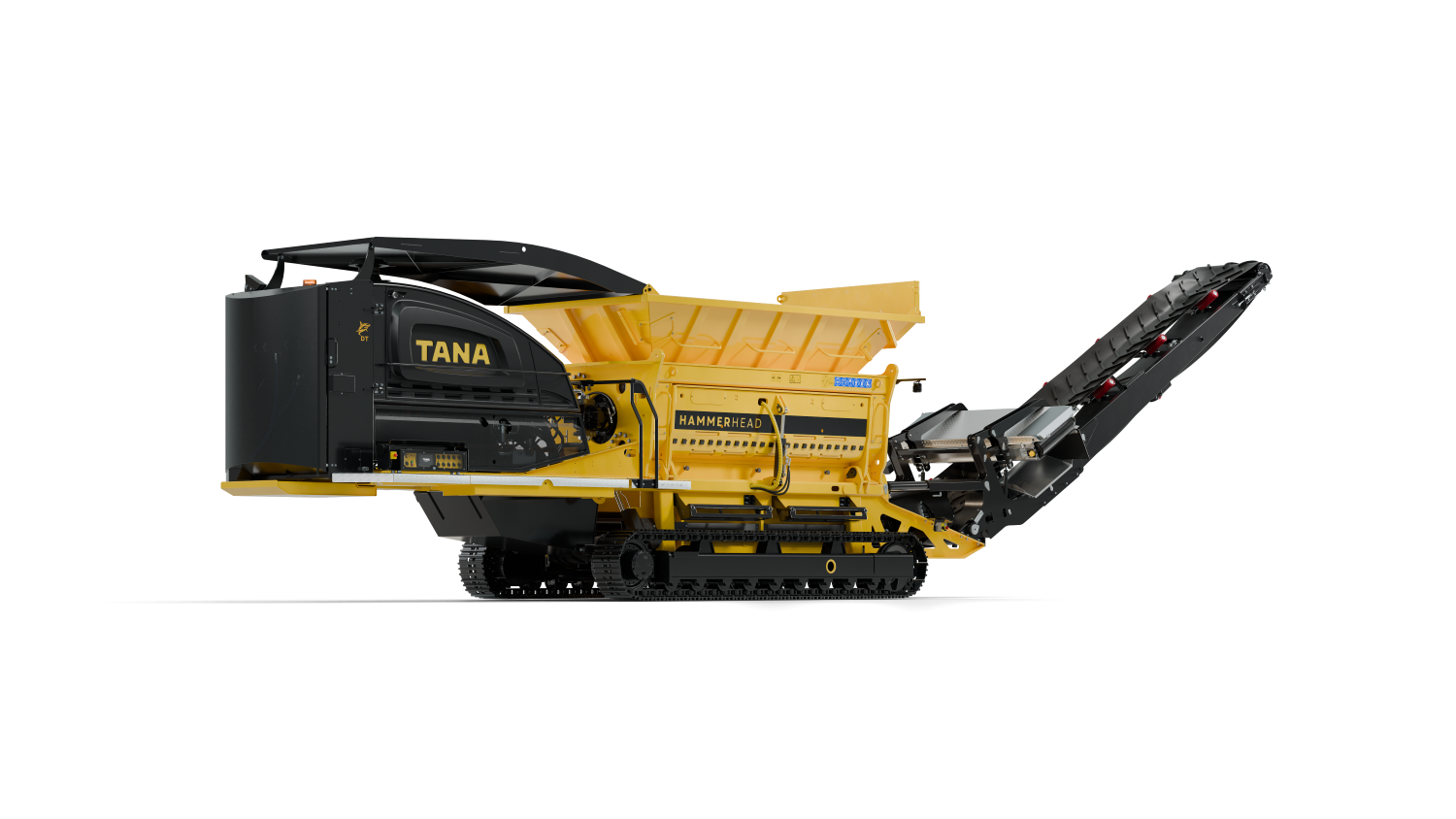
The TANA Hammerhead is a new-generation waste shredder designed for higher throughput. The key difference from the TANA Shark range is its faster rotor, which increases processing capacity for high-volume waste streams. This made the new machine an attractive choice for Kesrec Oy, a Finnish pioneer in plastics recycling looking to increase its plastic shredding capacity.
Tana introduced the new TANA Hammerhead shredder in spring 2025. Designed to process large volumes of waste quickly and reliably, its most significant technical difference compared with the TANA Shark is its faster rotor, operating at up to 40 rpm. According to Tana, this enables relatively homogeneous, high-volume waste streams to be processed up to 30–50% faster than before. Typical applications include construction and demolition waste, green waste and plastics.
It was therefore fitting that Finland’s first TANA Hammerhead was put to work at Kesrec Oy, a company specializing in plastics recycling. Kesrec has relied on the durability and performance of TANA shredders for years. With the new Hammerhead, the company can now complement the proven capabilities of its TANA Shark with increased throughput.
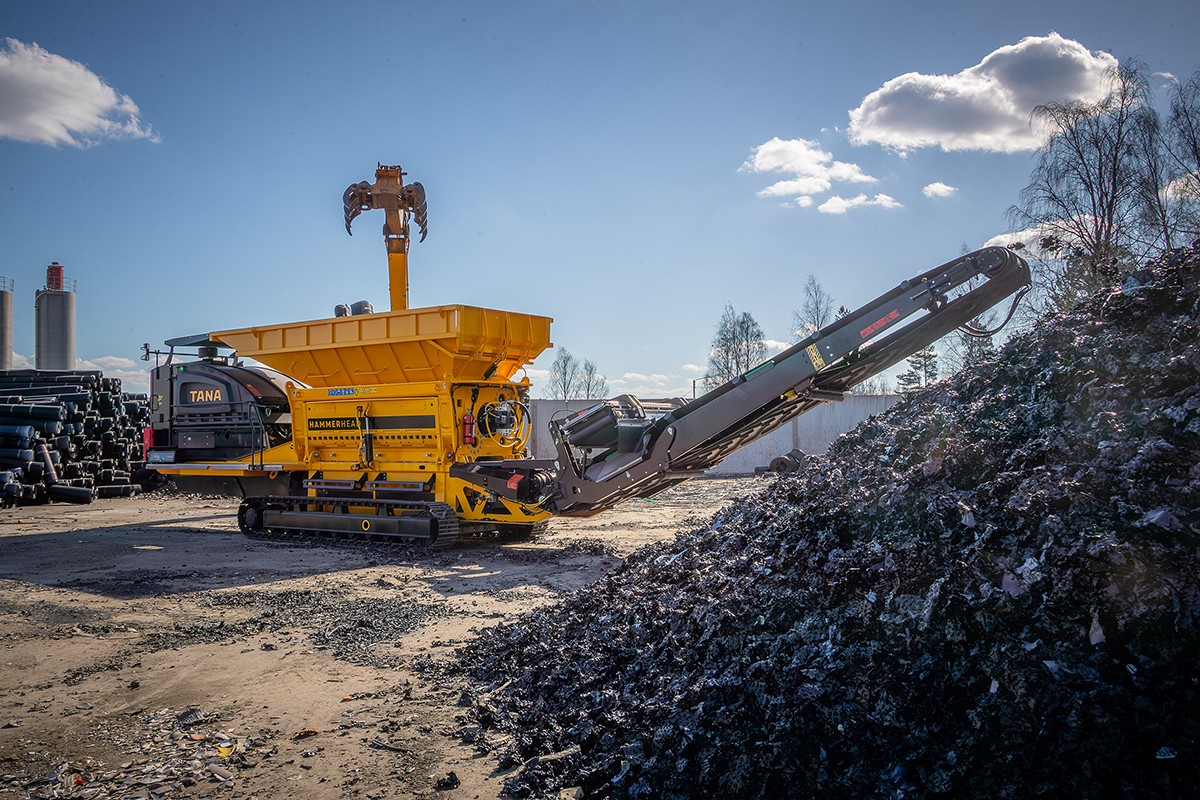
The TANA Hammerhead rotor operates at up to 40 rpm, compared with a maximum of 28 rpm on the corresponding TANA Shark DT shredder. The higher rotor speed enables increased throughput when processing relatively homogeneous waste streams. Depending on the material, the increase in processing capacity can be as much as 30–50%.
More capacity for growing operations
Based in Kuortane, Finland, Kesrec Oy has been working in the circular economy since 2008 and entered plastics recycling in 2016. Over the past decade, the operation has grown substantially. One indication of this growth is the company’s recent investment in a second TANA shredder: a new TANA Hammerhead to operate alongside its existing TANA Shark.
TANA is by no means a new name at Kesrec. The Hammerhead, which entered operation in April 2026, is already the company’s fourth TANA machine.
For Kesrec, plastics recycling means receiving and shredding plastic waste and then granulating it into reusable raw material for the plastics industry. The company also manufactures its own products from 100% recycled plastic, including foundation membranes, drainage mats and drip irrigation pipes. The entire process takes place at Kesrec’s facility in Kuortane.
“About 90% of the plastic arriving here for recycling has already been used: IBC containers, plastic pipes, drums, buckets, pallets, waste bins and so on,” says Jarno Myllymäki, Production Director at Kesrec Oy. “The rest consists of production waste from the plastics industry. From here, the material goes back to industry as recycled plastic granulate.” The most common materials processed by Kesrec include PP, LDPE, LLDPE and HDPE.
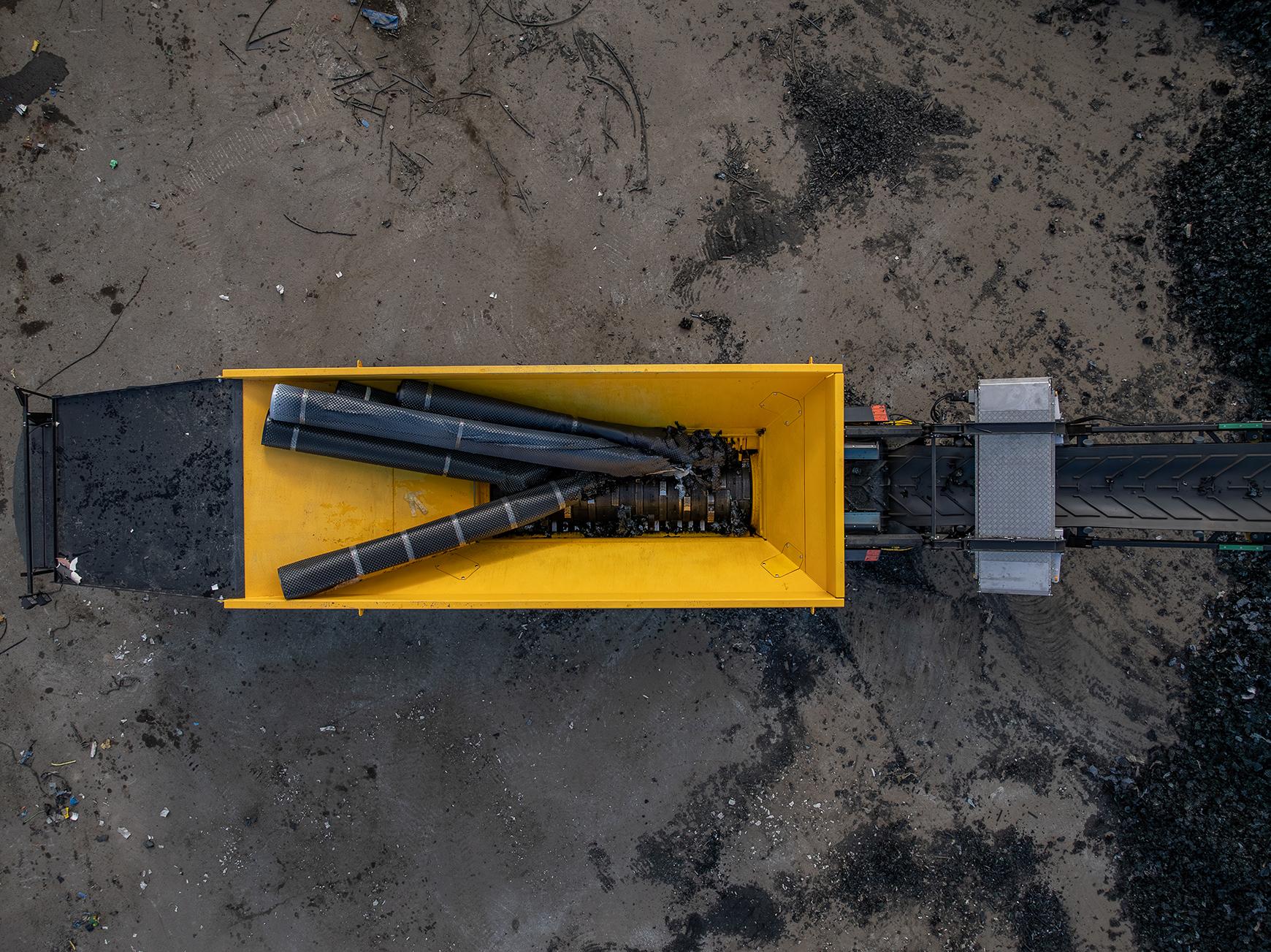
Kesrec Oy processes highly demanding plastic materials for recycling. Many of these plastics were originally designed to withstand harsh conditions, impacts and heavy mechanical loads, making them particularly challenging to shred. A roll of heavy-duty plastic membrane like this is not easy material to process, but the entire batch passed smoothly through the shredder.
Demanding plastics put the shredder to the test
The amount of plastic in the world is not decreasing, while the need to recycle it continues to grow. Kesrec has seen this first-hand through steadily increasing material volumes. Investing in a second shredder became a logical step, particularly when a new model offering higher throughput became available.
“Our operations have multiplied in scale over the past few years. And especially now that we have two granulation lines, we need to keep enough material flowing through the process,” Myllymäki explains. “We can now run two shredders simultaneously. At the same time, we always have backup capacity available if one of the machines is out of operation.”
Kesrec has already had the opportunity to put the Hammerhead’s increased throughput to the test. According to Myllymäki, the machine appears to deliver on its promise of higher processing capacity.
“The faster 33-knife rotor seems capable of handling largely the same materials as the Shark, but at a higher processing speed. That is important for us because we don’t really have a specific peak season. There is material to shred continuously, as much as we can process.”
The plastics handled at Kesrec are far from easy to shred. In fact, many of the products fed into the machine were originally designed to withstand impact, pressure, twisting, pulling, and other demanding mechanical stresses. The workload becomes even more demanding when the infeed hopper is filled to the top of its extensions, and the shredder is left to work through the load.
“There are certain materials, such as thick-walled pipes, that are particularly challenging,” Myllymäki says. “But all the TANA machines we have used have handled this type of work well. In practice, that means we haven’t had any major component failures. Wear parts naturally need replacing from time to time – that is simply part of the process.”
“We have tried every other brand on the market that we have been able to get onto our site, but some of them have lasted, for example, only an hour and a half in our application,” Myllymäki adds.
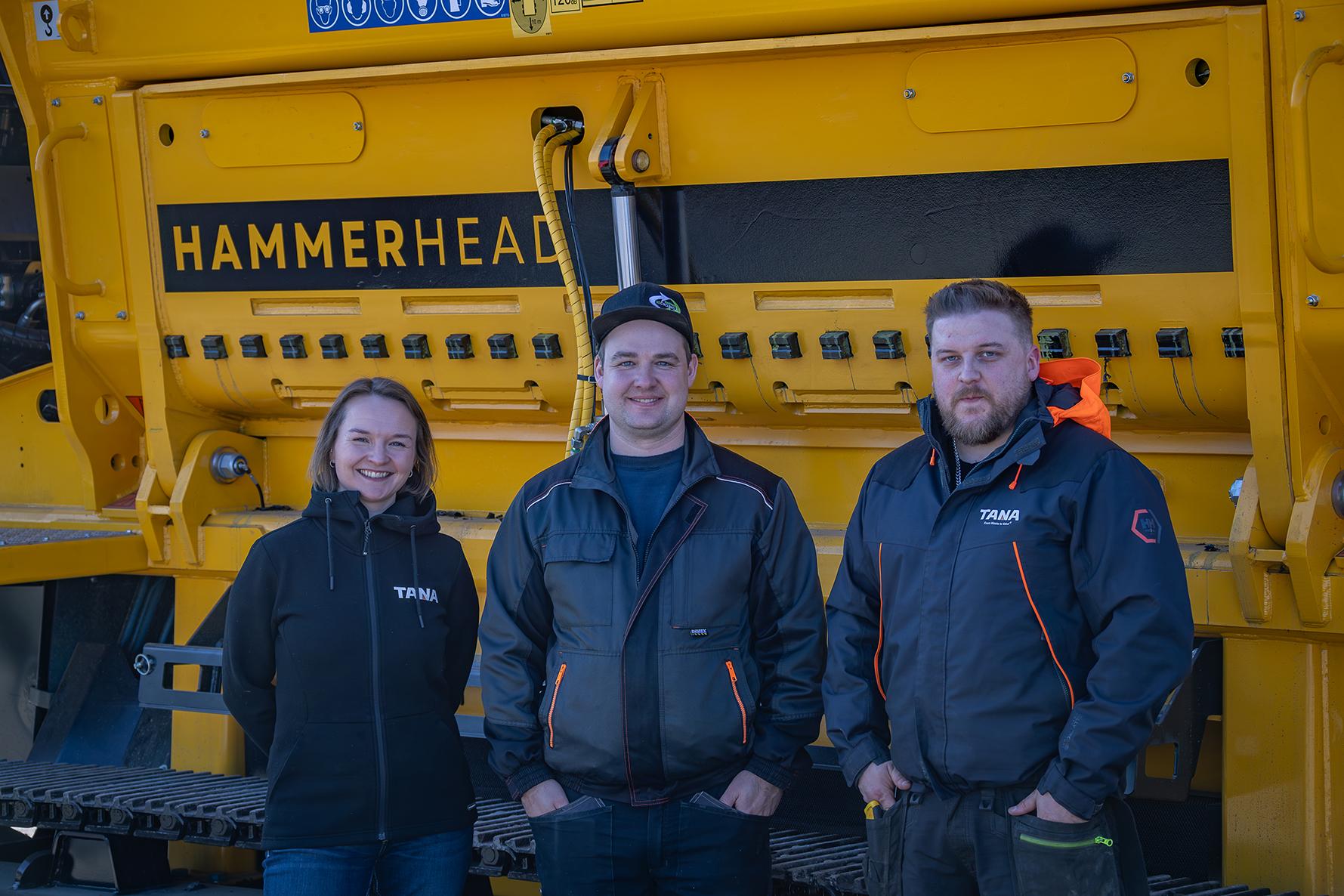
Tana’s Anu Söderena and Kesrec Oy’s Jarno Myllymäki agree that effective service support comes down to flexibility, problem-solving expertise and a customer-focused approach, both over the phone and on site. During a service round, TANA Service Technician Henri Mättö stopped by to make sure the new machine was ready for many productive operating hours ahead.
Service that keeps operations running
According to Myllymäki, another important reason Kesrec has continued to choose TANA is the level of service support available. He recalls a period several years ago when response times from TANA service could occasionally be longer. Today, that is no longer an issue.
“There are now two TANA service technicians in Finland, and there is always someone who answers the phone and can also come to the site when needed,” Myllymäki says. “Often, we can solve the issue over the phone in five minutes. We know these machines well by now, and we also have the resources to carry out a lot of the work ourselves. Tana is also open about sharing technical information, which is not necessarily the case with every equipment manufacturer.”
“And if we do need support on site, it can often be arranged for the same day. Usually, though, I have said that the following morning is soon enough,” he continues.
Anu Söderena, responsible for Tana’s rental operations in Finland as well as sales in the Nordic and Baltic countries, confirms that Tana has increased its service capacity.
“We increased our service resources a few years ago in response to demand from the field, and today the situation is good. Expert support is practically always available, at the very least by phone. Service visits are prioritized according to urgency, and in most cases we can have a technician on site the same day,” Söderena says.
She agrees with Myllymäki that many customers have the expertise and resources to carry out repairs themselves when provided with the right instructions over the phone. However, this is never assumed when arranging service support.
“If the customer wants full on-site service, that is exactly what we provide,” Söderena concludes.